

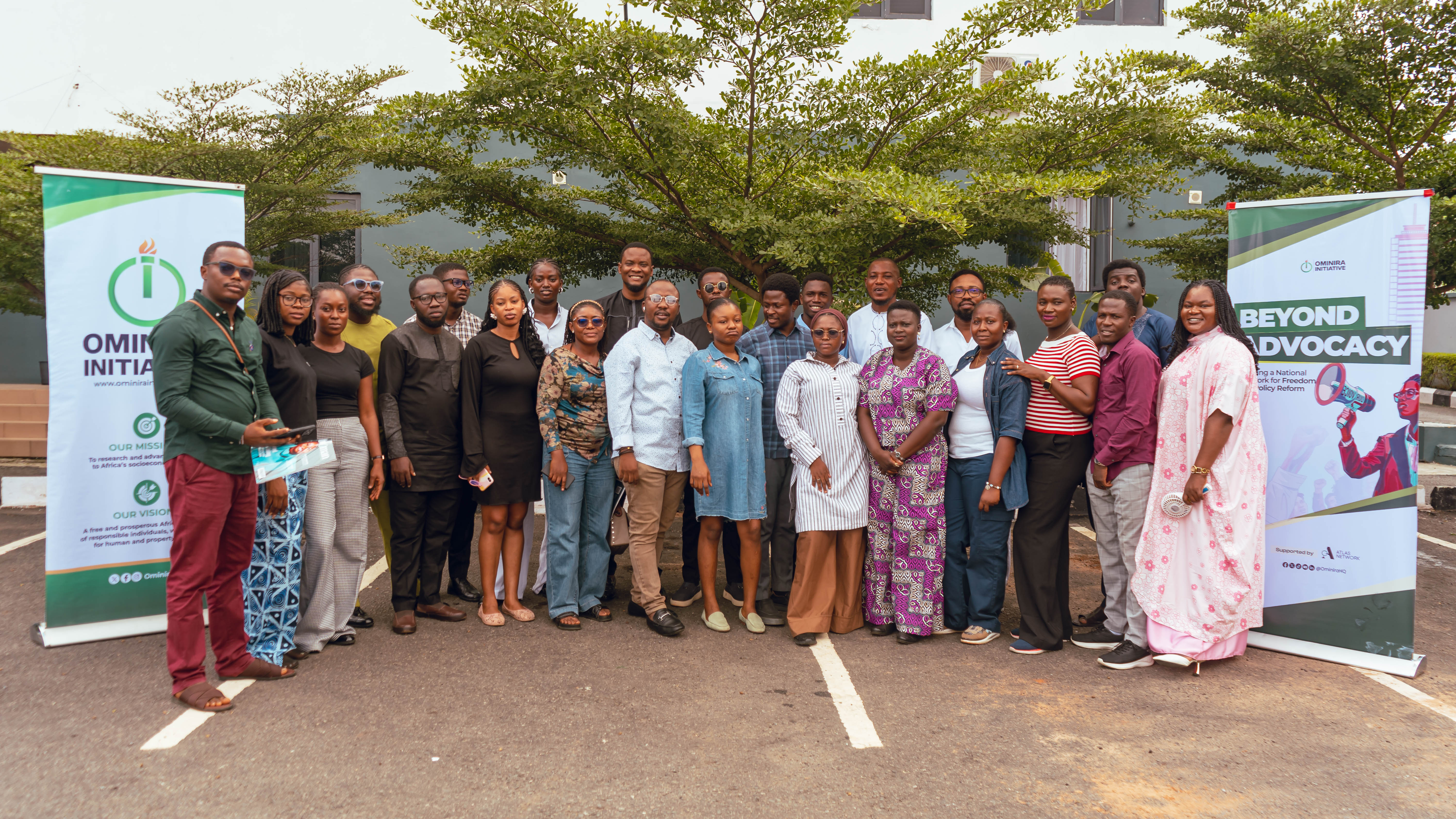

The workshop brought together 20 freedom advocates and 10 facilitators to strengthen advocacy skills, foster collaboration, and lay the foundation for a national network committed to advancing freedom and policy reform in Nigeria.
Human rights and freedom advocacy in Nigeria continue to face various struggles due to insecurity, bureaucratic bottlenecks, stringent policies, as well as the limited coordination among advocates and humanitarians working in this space. Therefore, in order to end freedom barriers and unify the efforts of advocates, Ominira Initiative organized a two-day Freedom Advocacy Workshop in Ibadan, Oyo State from Thursday 25th to Saturday 27th June, 2026.
According to the Executive Director, Lanre-Peter Elufisan, the Freedom Advocacy Workshop was organized to address the gaps in advocating for human rights, economic freedom and government accountability, by strengthening coordination and building a sustained network of advocates. He further stated that the Workshop is an integral part of The Freedom Advocacy Accelerator Nigeria (FAAN) Project, a 12-month public policy advocacy initiative designed to strengthen Nigeria’s freedom movement by addressing the fragmentation and resource gaps that limit sustained policy reform efforts at the subnational level.
Freedom Advocacy Workshop, which was aimed at creating an active national network of freedom advocates to stay connected in their advocacy, through collective action and sustained engagement, brought together 20 Freedom Advocates in Nigeria and 10 facilitators who spoke extensively on the Understanding Freedom Advocacy in Nigeria, Stakeholder Engagement, Monitoring and Evaluation, Research, Mental Health, Litigation, amongst other activities.
During his session on research, the Director of Research at Ominira Initiative, Bayonle Fesobi remarked on Nigeria being Africa’s Largest Economy, and most populous nation yet ranks poorly in global ranking of Economic Freedom. He suggested that to close this gap, we need policies to be reformed through evidence-based research and advocacy.
In her session, the Programs Manager at Ominira Initiative, Temiloluwa Oyeniyi addressed the major challenges faced by freedom advocates to include bureaucratic bottlenecks, lack of receptiveness of stakeholders, and inaccessibility of some public organizations. She emphasised the need to conduct extensive research on stakeholders to get information, and to ensure that stakeholders are mapped and analyzed on a spreadsheet, using the culture of stakeholder management at Ominira as a case study. She further encouraged public stakeholders at the workshop to embrace the act of partnership and improve on their communication channels.
The Day 1 of the Workshop concluded with two vital sessions namely; Monitoring, Evaluation and Reporting for Advocacy by Temidayo Musa and Using Litigation as an Advocacy Strategy by Festus Ogun. Mr Temidayo Musa spoke on how project execution goes beyond the output to measuring the impact. He mentioned that monitoring and evaluation builds the evidence organizations need to advance solutions to socio-economic issues in Nigeria and Africa through Monitoring and Evaluating, Accountability and Learning Framework–M.E.A.L.
Festus Ogun who spoke on how to use Litigation as Advocacy Strategy in Nigeria, encouraged advocates on the need to be exposed to the process of filing FOI, stating that the application is not limited to legal practitioners.
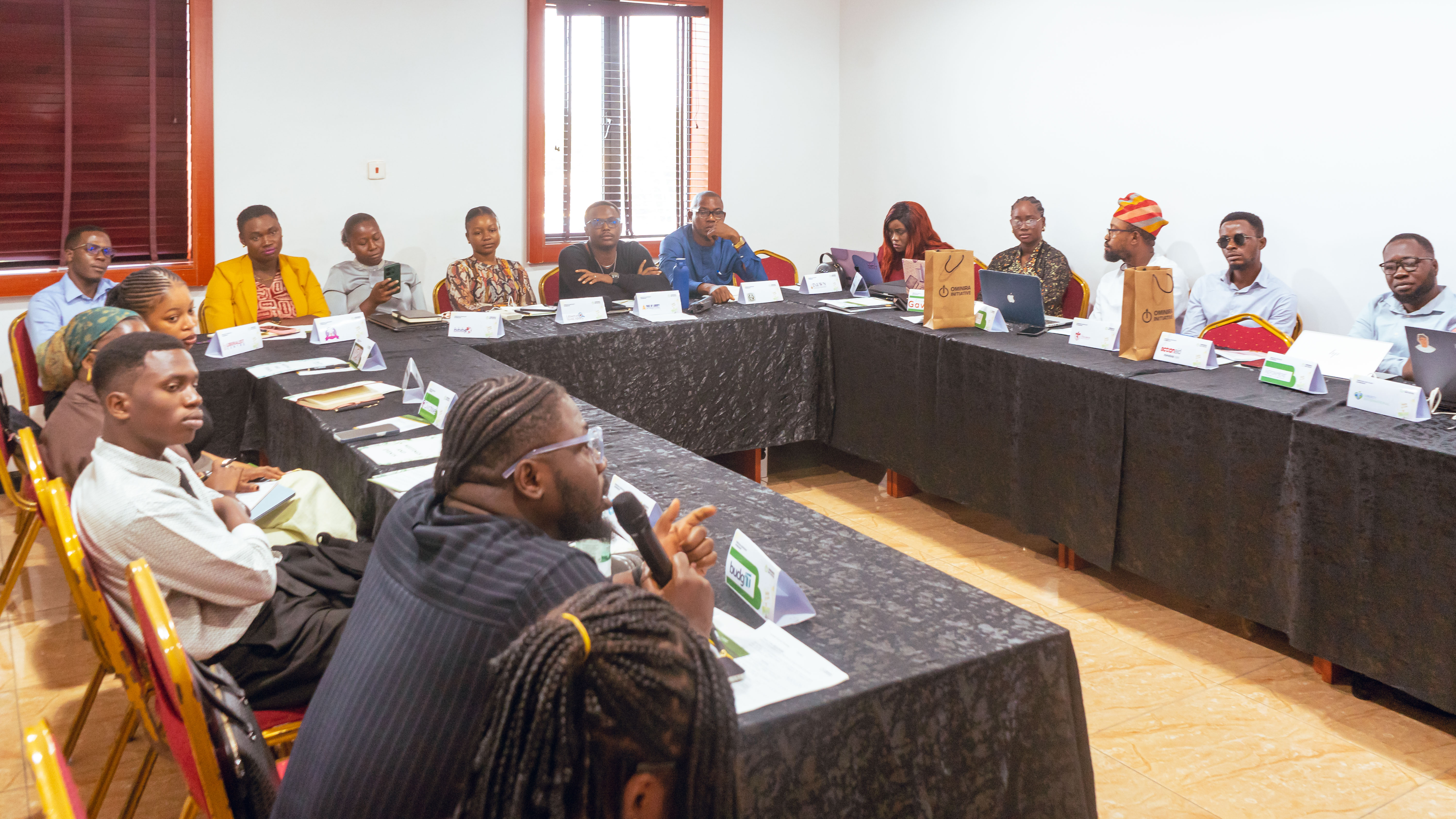
The Day 2 of the Workshop took a unique approach, focusing specifically on the practical aspect of Freedom Advocacy with speakers addressing issues on Research Tools for Freedom Advocacy, Media Engagement and Mental Health. The Mental Health Session focused on the wellbeing of the advocates, with Mary Ayuba, a Mental Health Practitioner, giving helpful tips on how advocates can manage stress and sustain healthy living on the job.
Following the Freedom Advocacy Workshop, participants completed a feedback survey to assess the relevance of the sessions, quality of facilitation, the organisation of the event, and their overall experience. The feedback results indicated participants highlighting Temidayo Musa, Bayonle Fesobi and Mary Ayuba sessions as the best part of the Workshop. A notable number of participants also mentioned how they could not point at a particular part of the Workshop as being“the best part,” instead they remarked on “everything” about the Workshop exceeding their expectations. While others commended the “swiftness and orderliness,” some of the participants also described the Mental Health session as personal and emotional.
The Freedom Advocacy Workshop marks the beginning of something worthwhile, which is the Freedom Advocacy Network. The workshop is merely a starting point, it marked an important first step towards building a stronger, more connected, and sustainable network of freedom advocates in Nigeria. The workshop ended with an emphasis on collective action and sustained coordination, recognizing that individual organizations have limited capacity to influence complex policy challenges in isolation, while coordinated advocacy offers stronger evidence, broader stakeholder engagement, and greater visibility for reform priorities. It marked the beginning of a longer-term effort to build an active national network of freedom advocates capable of coordinating work and contributing to policy reform across Nigeria.
