


In a bid to draw lessons from regional and global experiences in trade liberalisation, land governance, and justice reform relevant to Nigeria, and to strengthen coalitions for reform, Ominira Initiative convened policymakers, business leaders, legal practitioners, investors, academics, civil society actors, and development partners in Lagos on February 12, 2026 for the Economic Freedom Summit, the culminating event of the Economic Freedom Audit (EFA) of Nigeria Project.
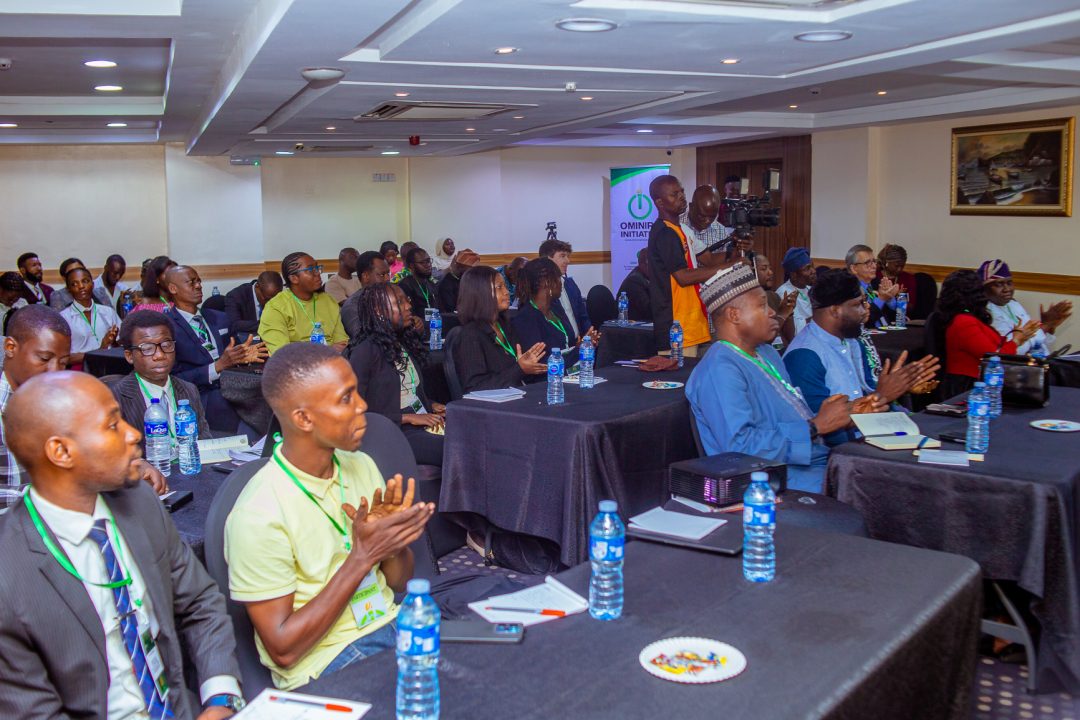
The summit tagged “Towards a Competitive Nigerian Economy” was held at The Colossus Hotel, Ikeja Lagos, and brought together over 50 stakeholders to examine the state of economic freedom in Nigeria and agree on practical, actionable reform pathways.
At the opening of the Summit, Lanre-Peter Elufisan, Executive Director of the Ominira Initiative for Economic Advancement, welcomed participants to the Economic Freedom Summit 2026, describing it as the culmination of the Economic Freedom Audit of Nigeria project. He appreciated institutional partners, the Atlas Network and the Fraser Institute, and acknowledged leaders from academia, the legal profession, and the media. He noted that the Summit would formally launch Essential Reforms for Growth: An Economic Freedom Audit of Nigeria, emphasizing that a competitive economy requires predictable trade rules, secure property rights, efficient legal processes, and institutional stability. Citing findings from the Economic Freedom of the World, he stressed that while Nigeria faces institutional weaknesses, the Summit’s focus is on advancing practical, evidence-based reforms to unlock growth and opportunity
As part of the engagements at the Summit, Ominira Initiative also hosted two global partners: Hunter Rauch of Atlas Network and Fred McMahon of the Fraser Institute. Both commended the report’s quality, the depth of dialogue, and the strong stakeholder engagement, noting that higher levels of economic freedom consistently correlate with greater prosperity and improved living standards.
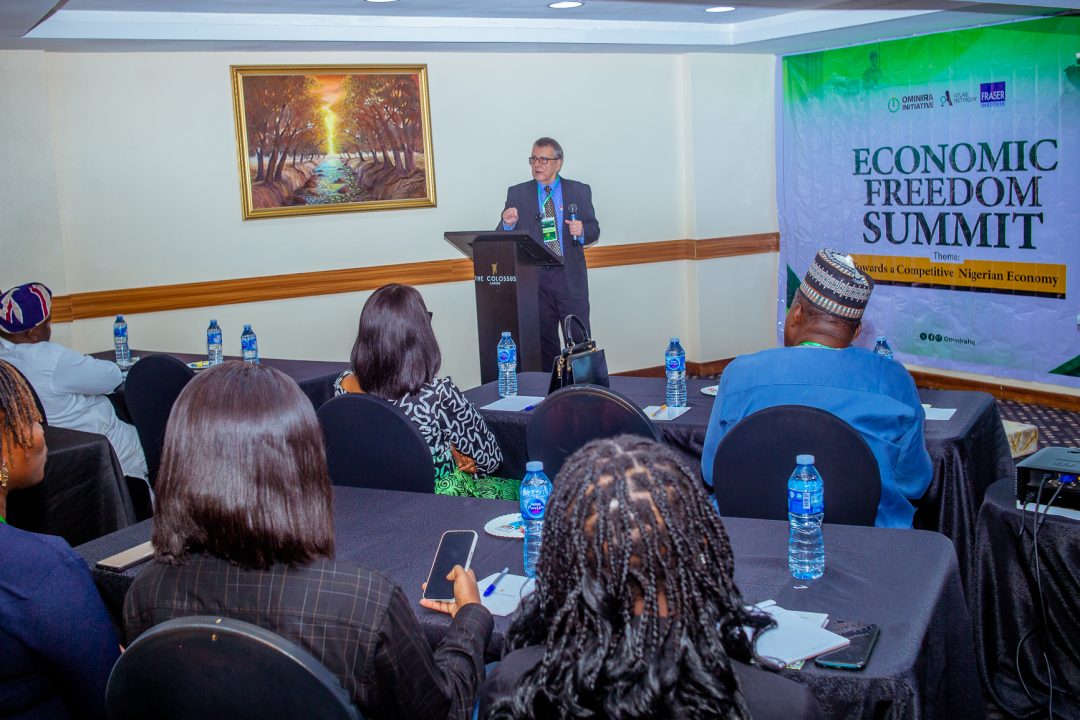
Rauch stated that Atlas Network is honoured to support Ominira Initiative, adding that the organisation has demonstrated practical, evidence-based pathways to strengthen Nigeria’s economic freedom. McMahon described the booklet as the most impressive he has seen across similar events in several countries, emphasizing the critical link between economic freedom, national well-being, and overall happiness.
Presenting key findings from the report, Professor Olawale Ogunkola of the University of Ibadan observed that Nigeria’s productive sector has weakened due to policy inconsistencies and an unfriendly business environment. He criticised the country’s tariff structure for prioritising revenue generation over trade promotion and called for development-driven trade openness that aligns trade and investment policies. Professor Akintunde Otubu, consultant for the legal component of the report, underscored the urgency of comprehensive legal reform and stronger protection of property rights.
The keynote address was delivered by Dr. Chinyere Almona, Director-General of the Lagos Chamber of Commerce and Industry, who emphasised that the government must create an enabling environment for businesses to thrive so the private sector can drive job creation. She called for the establishment of specialised land courts, greater digitisation of processes, and institutional strengthening.
The Trade Openness panel, moderated by Bayonle Fesobi, Director of Research at Ominira Initiative, featured panelists including Prof. Bondo Adi of Lagos Business School, Mr. Ismael Balogun; President of the Nigerian-Indonesian Chamber of Commerce, and Mr. Stephen Akut from the Nigerian Economic Summit Group. They highlighted the need to empower existing institutions, grow Nigeria’s manufacturing base, build skills as a national priority, redefine education to meet market needs, and reposition agriculture as a foundational sector. Panelists also stressed improving access to capital, reducing trade costs, and implementing a small number of high-impact reforms in the short term.
In the plenary session, economist Dr. Muda Yusuf advocated a shift from unstructured openness to strategic trade openness anchored on transparency and deliberate support for SMEs and private sector growth.
The Legal Reform and Property Rights panel, moderated by Temiloluwa Oyeniyi, Programs Manager at Ominira Initiative, showcased insights from panelists Mr. James Olaseni Sonde of the Nigerian Bar Association, Lagos State Chapter, Ikhine Mary of Citizen Gavel, and Festus Ogun. They called for merit-based judicial appointments, stronger infrastructure for court operations, expanded digital and virtual processes, and modernised land administration systems, including electronic registration and unique land identifiers.

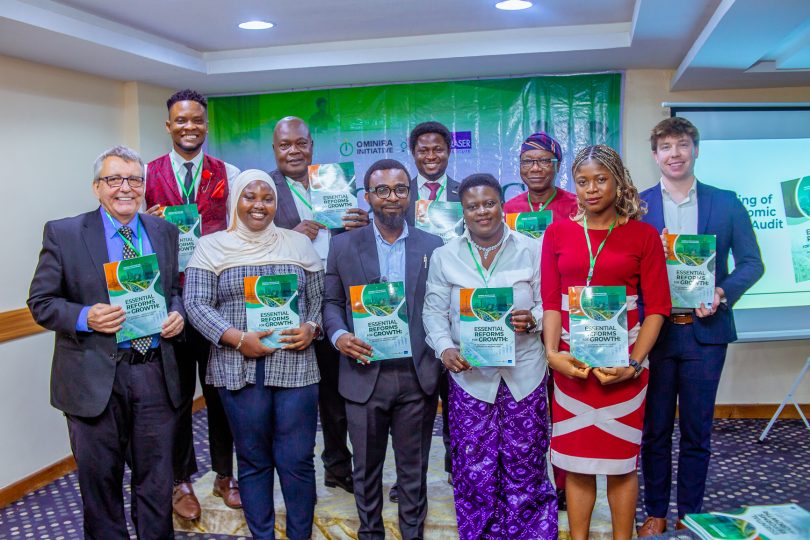
The highlight of the Summit was the formal launch of the Economic Freedom Audit Report tagged “Essential Reforms for Growth: An Economic Freedom Audit of Nigeria” by Lanre-Peter Elufisan, Executive Director of Ominira Initiative. He was joined on stage by members of the Ominira team, the project consultants; Professor Olawale Ogunkola and Professor Akintunde Otubu, as well as representatives of the Atlas Network and the Fraser Institute, marking a significant moment in advancing evidence-based institutional reform for Nigeria’s economic competitiveness.
The Economic Freedom Summit reaffirmed Ominira Initiative’s commitment to advancing policies and institutions that expand economic choice, protect property rights, and unlock Nigeria’s productive potential. The Economic Freedom Audit of Nigeria now provides a strong evidence base to guide advocacy, policy engagement, and collective action toward a freer, more prosperous, and more inclusive Nigerian economy.
